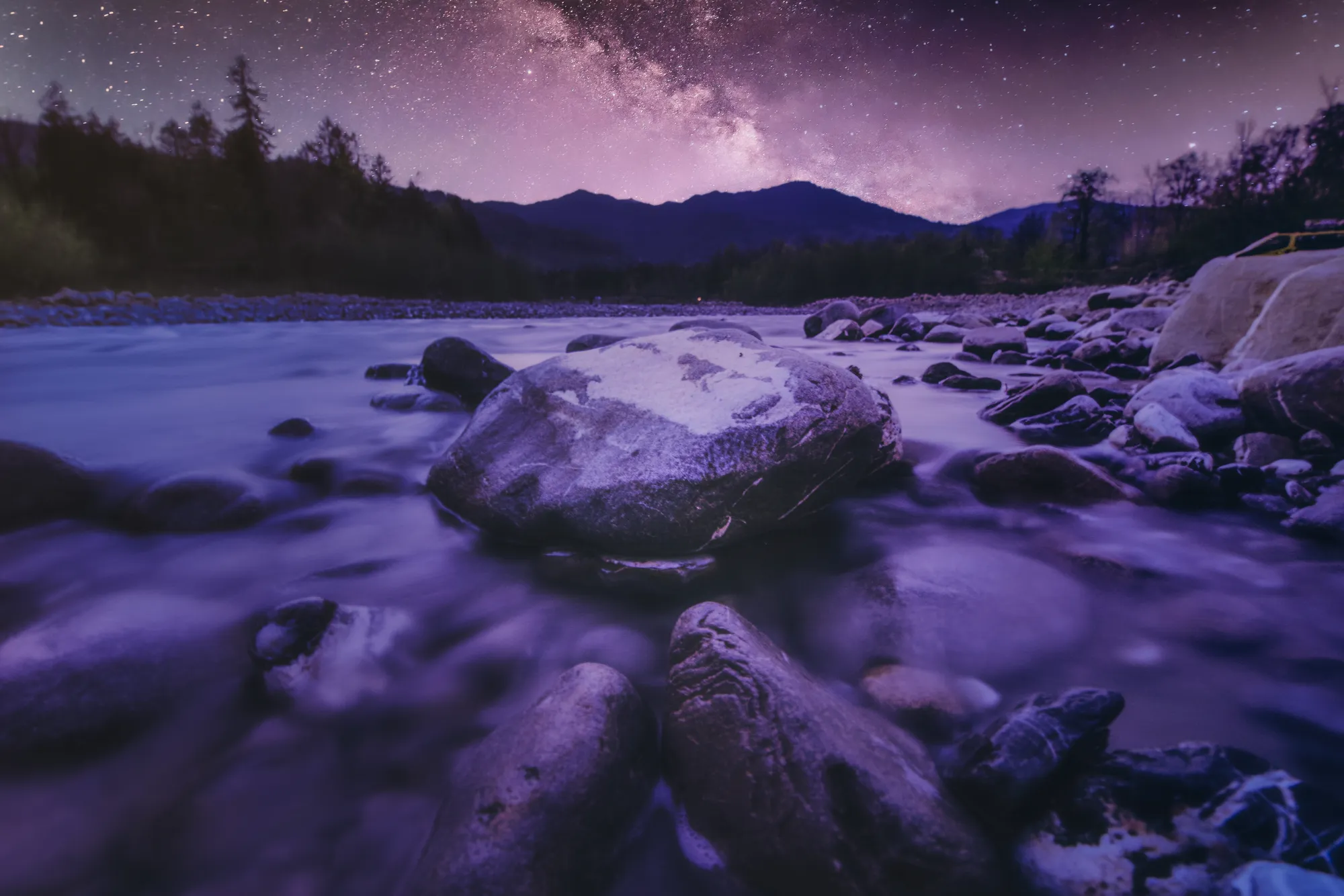
In 2018, I stood on a bench under a clear night sky, absolutely convinced I had found the Milky Way. I hadn't — what I photographed was just a brighter patch of sky, nothing more. I didn't know yet what direction to look, which tools could help, or how much of astrophotography actually happens afterward, at the editing stage.
Today, planning looks very different. Switzerland's Swisstopo app lets me study terrain and elevation in advance, working out where a clear, unobstructed view is likely. Sun Surveyor helps with direction and timing, even offering 3D and photo overlays through Google Maps to preview a location before ever driving there.
And yet, even with a compass and every modern tool available, the mountains at night have their own way of humbling you. More than once I've been convinced I was facing the right way, only to find the Milky Way appearing thirty degrees off to the side — several of my early shots simply pointed the wrong direction. Eyes need time to adjust to the darkness before the sky truly reveals itself. Only then does the real work with the camera begin.
Truly dark skies are also getting harder to find every year. And even at a good location, so much depends on weather that's never fully predictable — a clear forecast is no guarantee of a clear night. More than once I've arrived, barely started shooting, and watched clouds begin building over the peaks within half an hour. It might rain, it might not; there's no way to know for certain, only to go and see. These trips often mean driving late into the night — sometimes before a work day, sometimes after one with barely any rest, heading up into the mountains around midnight — with no guarantee the results will be worth it.
Every photographer starts somewhere. The photographs in this collection are the result of that same process, repeated many times over: planning carefully, getting it wrong anyway, and trying again.