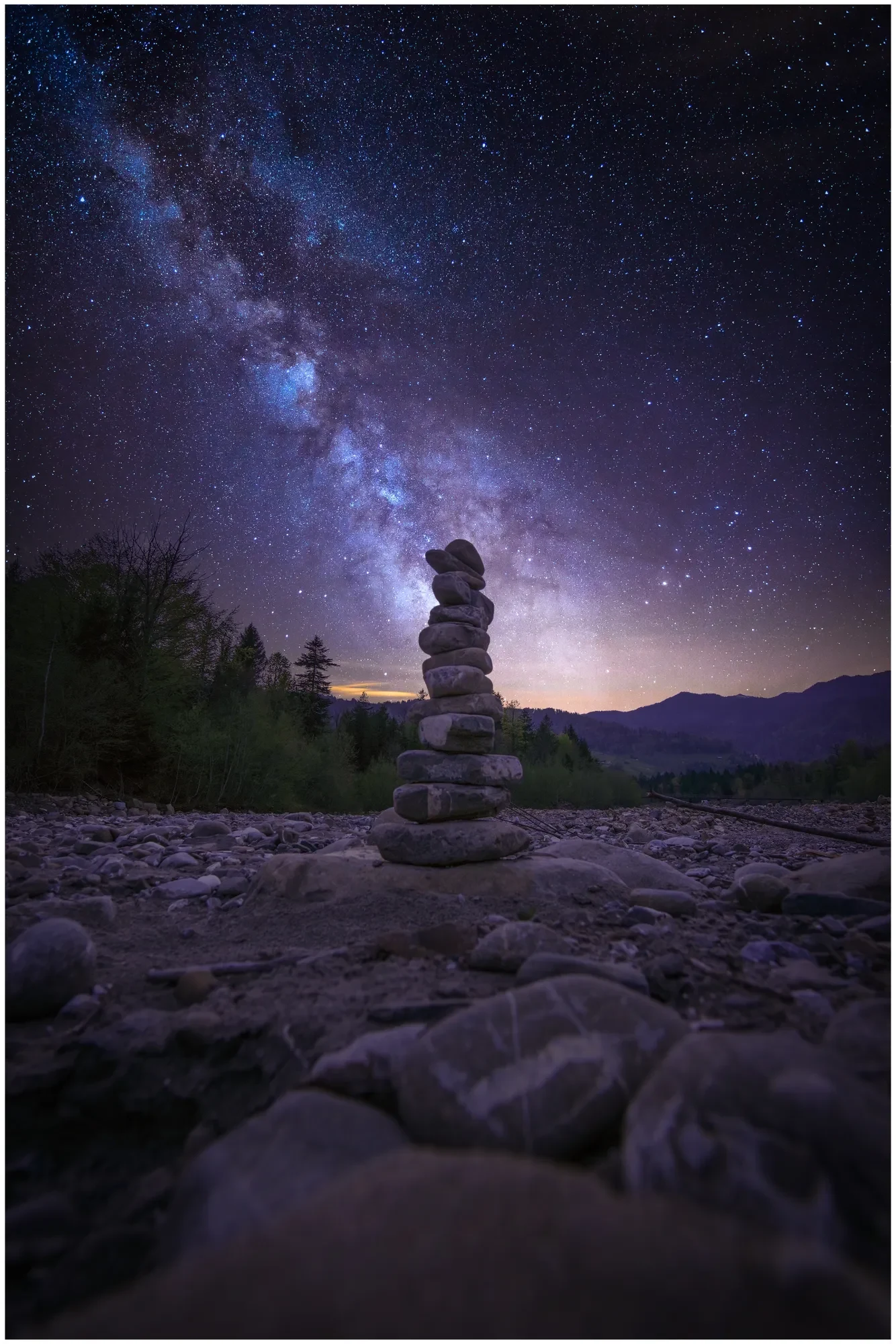
Each night is calculated individually — checking when the galactic core is above the horizon during astronomical darkness and the moon is below it, for at least 30 minutes. Nights are grouped into expandable phases, roughly one per lunar month. Window length and timing vary a lot by latitude and season. Weather only shows once a forecast is available (up to about 5 days ahead). This calendar recalculates itself from today's date, so it never runs out.
Calculating upcoming dates…
Times and orientation are calculated for the selected location using standard astronomical formulas, not minute-exact for one specific spot — use Sun Surveyor to check the precise position for the night and location once a date is set. Weather forecast: MeteoSwiss ICON-CH2 for Switzerland, Open-Meteo's best available model for other locations.
"Notify me if it looks good" is a new beta feature — if you run into any errors enabling it, please let me know at florian.thalmann@gmail.com.
Plan ahead
Eclipses 2026 – 2027
- Partial solar eclipse — 12 August 2026. Around 91% coverage across most of Switzerland, peaking at 20:18 (up to 92% in Valais). The sun is very low and close to setting, so a clear view toward the west-northwest is essential. A certified solar filter (ISO 12312-2) is required in front of the lens — the total eclipse itself is only visible from Greenland, Iceland and northern Spain.
- Partial lunar eclipse — 28 August 2026. Begins around 04:30 in the morning — an early one for early risers.
Plan ahead
Meteor showers 2026 – 2027
- Perseids — night of 12/13 August 2026. Up to 100 meteors/hour under excellent, moon-free conditions this year — the best shower of the season.
- Draconids — night of 8/9 October 2026.
- Orionids — night of 21/22 October 2026. Around 20/hour.
- Leonids — night of 16/17 November 2026. Around 15/hour.
- Geminids — night of 13/14 December 2026. Up to 150 meteors/hour with barely any moonlight — the strongest shower of the year.
- Quadrantids — early January 2027.
- Lyrids — night of 22/23 April 2027.
Plan ahead
Planets 2026 – 2027 best for telescope shots
- Saturn at opposition — 4 October 2026. Visible all night and at its brightest.
- Neptune at opposition — 26 September 2026.
- Uranus at opposition — 25 November 2026.
- Jupiter at opposition — 11 February 2027. Magnitude −2.5, bright in Leo.
- Mars at opposition — 19 February 2027.
A rough guide to what works well versus what's just about workable, plus a simple calculator below to check a specific combination.
Milky Way long exposure Try your own combination
| Level | Focal length | Aperture | ISO | Shutter speed |
|---|---|---|---|---|
| Optimal | 14–24mm | f/1.4–f/2.0 | 1600–3200 | 15–20s |
| Good | 24–35mm | f/2.0–f/2.8 | 3200–6400 | 10–15s |
| Minimum / workable | 35–50mm | f/2.8–f/4.5 | 6400–12800 | 5–10s |
A simplified planning guide, not a substitute for checking the result on the back of the camera — actual noise performance varies a lot by camera body.
Star trail exposure
Shooting one continuous long exposure risks heat noise and battery limits — stacking many shorter frames in software gives a cleaner result for the same total arc.
Work out the exposure time for daytime long exposures with a neutral density filter — waterfalls, seascapes, motion blur. A general-purpose tool, separate from the night-sky calculator.
Calculate your exposure
Assumes standard reciprocity — very long exposures on some cameras or film may need extra compensation.
See where I personally ran into trouble with compass-based star tracking (like the Pentax Astro Tracer) — likely local magnetic interference at certain mountain locations. Field results, not a scientific survey; always test with a short exposure on site before committing to a full session.
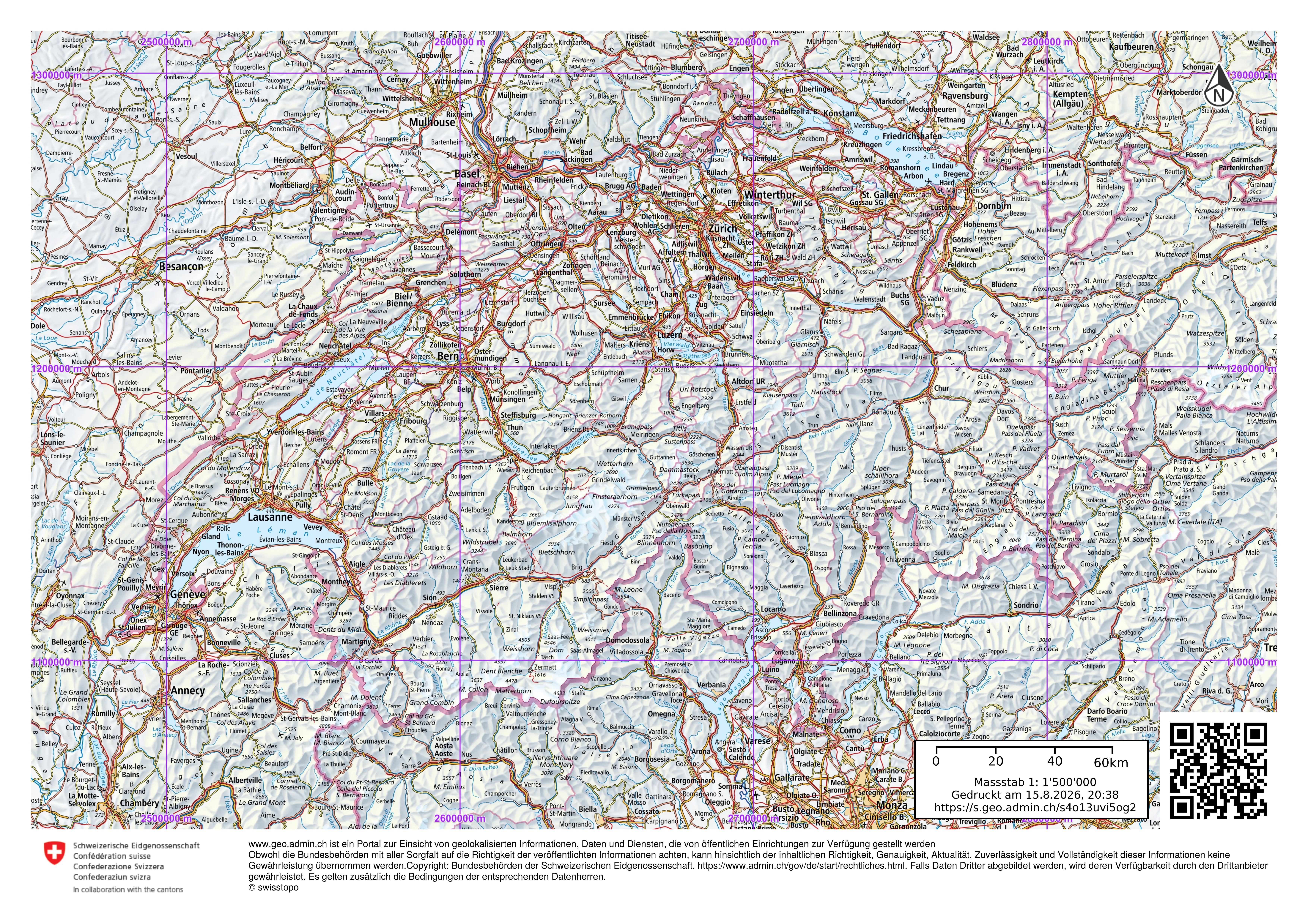
Map data: © swisstopo — used with attribution, unmodified. Pins are my own overlay. Pinch or scroll to zoom, drag to pan.